














It goes without saying that living with PTSD can be hard and that, for most people suffering from PTSD, the emotional pain may be so severe that it results in unhealthy coping methods, such as using drugs or alcohol. In time, the initial attempt to block pain will turn into addiction, which will become hard to stop.
However, the good news is that it is possible to get effective integrated treatment for PTSD and addiction. Instead of focusing on one problem while overlooking the other, with an integrated approach, it is possible to treat two disorders at once, which increases the likelihood of recovery.
In the following guide, we will explain why PTSD and addiction go hand in hand, how integrated treatment works, and why picking the right rehab program can be crucial.
PTSD and Addiction Treatment: Why These Two Disorders Are Closely Linked
PTSD is a psychological condition that a person suffers from after being exposed to some traumatic event or events like military combat, physical assault, child abuse, natural disasters, car accidents, etc. The main symptoms of PTSD include:
- Flashbacks
- Nightmares
- Anxiety and panic attacks
- Hypervigilance
- Emotional numbness
- Sleep problems
- Avoidance of trauma-induced memories
Many people use alcohol or drug abuse to escape from these traumatic symptoms. However, although substances can help relieve them, they eventually tend to exacerbate the problems associated with PTSD and raise the risks of developing addictions.
Research indicates that patients diagnosed with PTSD have a high chance of developing a substance use disorder compared to individuals with no psychological conditions of a trauma-induced kind. The condition is called dual diagnosis or co-occurring disorder.
Reasons Why the Treatment of One Condition Is Not Effective
For many years, the treatment of addiction was usually separate from addressing mental disorders and vice versa. Patients might go through the process of rehabilitating from drug or alcohol abuse but had no PTSD treatment at all, or they could undergo counseling but still be addicted to drugs or alcohol.
The problem of treating only one disorder is that both conditions reinforce each other. For instance:
- Undiagnosed PTSD symptoms can lead to the development of cravings.
- Using substances can render trauma treatment less effective.
- Anxiety and depression may increase throughout treatment if the person is dealing with unresolved trauma.
This is the reason why current PTSD and addiction treatment addresses both disorders at once rather than treating them as different issues. Integrated treatment has become the standard of care when treating co-occurring disorders since it deals with the causes of both mental illnesses and addiction simultaneously.
What is Integrated Treatment?
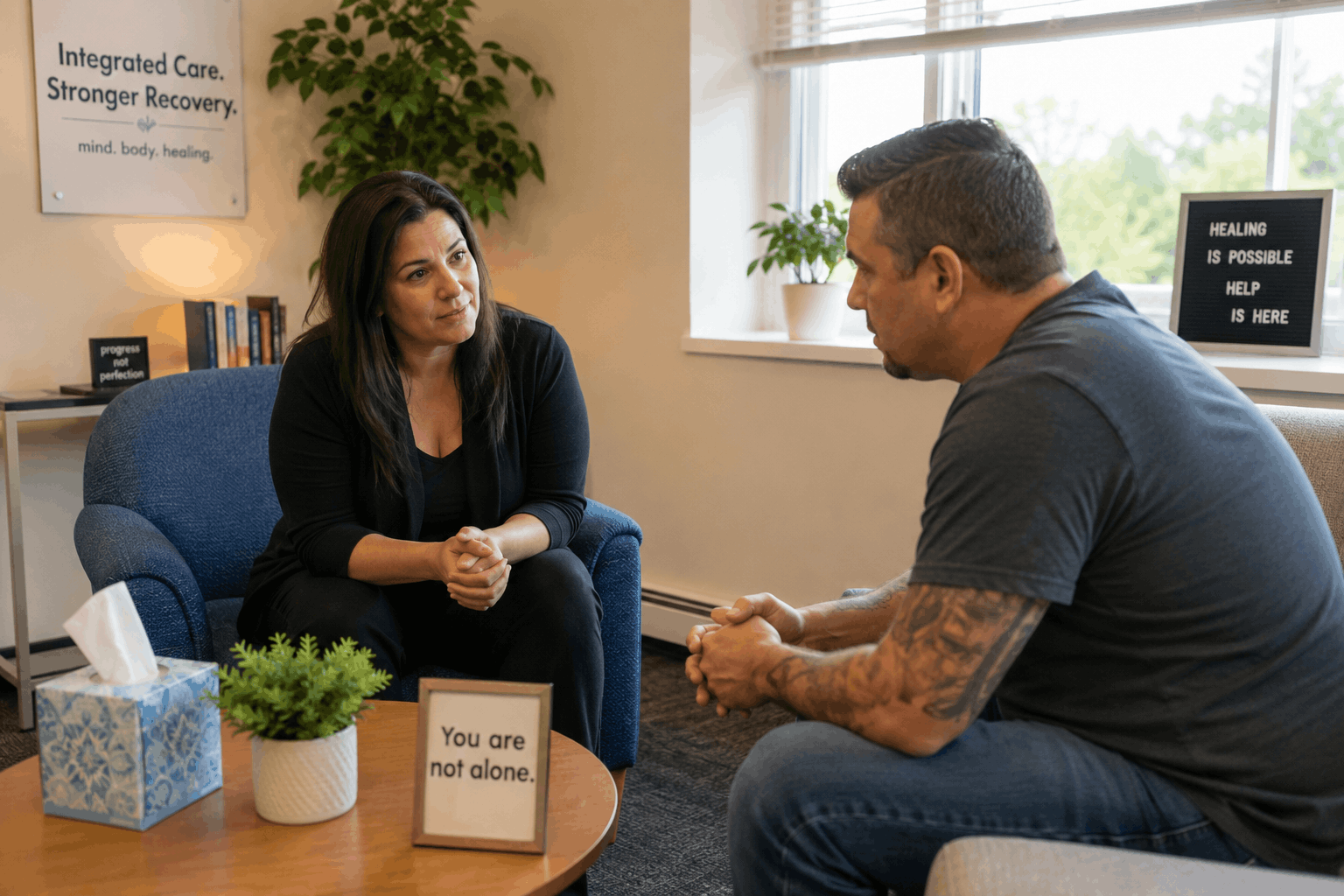
Integrated treatment includes addiction, mental health treatment, and trauma-informed care in one treatment program.
Individuals do not visit different providers separately but receive treatment in one cohesive program provided by a multidisciplinary team, which may consist of:
- Therapists
- Addiction counselors
- Psychiatrists
- Doctors
- Case managers
- Peer specialists
All treatment components work toward a common goal – recovery.
Key Components of Integrated PTSD and Addiction Treatment
Comprehensive Assessment
Treatment starts with a comprehensive assessment of a person’s psychological state, previous traumas, substance abuse, general health condition, and their goals. This allows specialists to develop personalized treatment programs instead of treating all patients with the same scheme.
Trauma-Informed Treatment
The essence of trauma-informed treatment is the understanding of the way in which past experiences affect current behavior. Here are some evidence-based treatments that are frequently used in practice:
- Cognitive Behavioral Therapy (CBT)
- Cognitive Processing Therapy (CPT)
- Eye Movement Desensitization and Reprocessing (EMDR)
- Dialectical Behavior Therapy (DBT)
- Seeking Safety Therapy
With their help, a person learns how to deal with traumatic memories and develop proper coping mechanisms.
Addiction Recovery
Addiction recovery services may comprise:
- Medical detox (if necessary)
- Individual counseling
- Group therapy sessions
- Relapse prevention program
- Medication-assisted treatment (MAT – if needed)
- Family therapy
The goal is not just sobriety but the maintenance of abstinence.
Medication Management
Sometimes patients are prescribed medication for the reduction of PTSD symptoms, depression, anxiety, and substance craving. Medication is closely monitored alongside therapy during treatment.
Family Support
PTSD and addiction affect an entire family. Family education and therapy can help build trust, improve communication, and increase the effectiveness of recovery supports.
The Importance of Trauma-Informed Care
Not all addiction programs have experience treating trauma.
What makes trauma-informed care unique is the understanding that many cases of addiction are born out of the body’s reaction to trauma.
Instead of questioning “What’s wrong with you?”, they inquire “What happened to you?”
The above empathic attitude helps to decrease the feeling of guilt and enables the clients to cope with their trauma experiences without being swamped by them.
Many centers are dealing specifically with complex PTSD, as there are people who experience trauma that has occurred over time, for example, child abuse, domestic violence, or long-term neglect.
Benefits of Combining PTSD and Addiction Treatment
Some of the benefits include:
- Decreased risk of relapse
- Improved emotional regulation
- Reduction of PTSD symptoms
- Improved physical health
- Development of coping skills
- Building healthier relationships
- Increased engagement in the treatment
- Better results of treatment
As opposed to bouncing back and forth from mental health services to addiction specialists, integrated care offers a single approach designed specifically for the individual.
Who Can Be Helped by Integrated Care?
Integrated treatment can help individuals suffering from:
- PTSD with alcohol dependence
- Addiction with a trauma history
- Anxiety and substance abuse disorder
- Depression with addiction
- Combat trauma in veterans
- First responders
- Victims of domestic abuse
- Individuals who suffered trauma during their childhood
- Complex PTSD with substance abuse
It does not matter whether the symptoms began recently or have been around for many years – integrated care can help heal on both an emotional and physical level.
Choosing a Treatment Program
Not all rehab centers will be able to offer the right kind of treatment for trauma. Some things to look out for when choosing a provider are:
- Licensed mental health counselors
- Trauma-informed care
- Evidence-based therapy for PTSD
- Experience with dual diagnosis cases
- Personalized treatment plans
- Family participation
- Relapse prevention
- Aftercare planning
Dual diagnosis treatment centers Florida specialize in helping individuals who are suffering from the effects of addiction and mental illnesses. In fact, the chances of successful recovery increase significantly when one chooses a center that can deal with co-occurring disorders.
Recovery Is Possible
The process of recovery requires time and patience and involves many professionals. Though PTSD may seem like an obstacle on the way to recovery, treatment will help to heal both traumas and behavioral problems caused by them.
Treatment does not imply only getting rid of substances, but also learning how to live without trauma influencing decisions. Recovery is possible with proper and compassionate care and various methods.
Conclusion
When one suffers from PTSD and addiction, treating only one problem can lead to the same situation in the future. That is why it is so important to get integrated care for healing from both disorders.
Revolution Recovery Center offers effective, research-based treatments for patients suffering from addiction, PTSD, and other co-occurring disorders. Using individualized treatment plans, trauma-informed care, and dual diagnosis programs, they help their patients build solid ground on which they can start their new life.
Contact Details
Name – Revolution Recovery Center
Phone (24/7) – (866) 890-7286
Email – info@revolutionrecovery.com
Address – Corporate Office: 415 S. Federal Highway, Boynton Beach, FL 33435, USA
FAQs
Is it possible to treat PTSD and Addiction simultaneously?
Yes, it is. The integrated treatment approach allows treating these disorders simultaneously and provides more successful results than separate treatment for each disorder.
Why do PTSD and substance abuse coexist?
Many people use alcohol or drugs to cope with their painful memories, anxiety, or other uncomfortable emotions. This coping strategy may lead to developing an addiction.
What is a Dual Diagnosis Treatment?
Dual Diagnosis treatment is the treatment for a mental health disorder combined with a substance use disorder.
Is it safe to use trauma therapies in addiction treatment?
It is safe, as trauma-informed therapists always make sure that their clients get proper treatment at the right time and at the correct pace to stay emotionally stable.
What are complex PTSD treatment centers?
Complex PTSD treatment centers refer to facilities that are designed to treat patients with a history of prolonged trauma through treatment approaches that suit their complicated history of trauma.
How long does PTSD and addiction treatment take?
The duration depends on how much time each patient requires in order to receive maximum benefits from treatment programs. Some people need only a few weeks of treatment, whereas others require several months.
What should I consider in dual diagnosis treatment centers Florida?
In this case, you should be able to see a few things, including licensed professionals, a trauma-focused approach, evidence-based therapies, personalized treatment, family support, and aftercare programs.
Is full recovery from PTSD and addiction possible?
Yes, many people manage to recover successfully through a combination of therapy and healthy coping techniques.