
Medically Reviewed by: Alyssa DeStefano, LCSW, Licensed Clinical Social Worker | Revolution Recovery Center
Often, it doesn’t happen anything like how people anticipate. No sudden lightbulb flashes on, no overt signal – but merely a doctor’s note to, say, fill a prescription after surgery, a fall or an overwhelming anxiety attack; taken without deviation after following the medical direction implicitly. Somewhere along the road though, the physical begins making demands.
Whether it is that the initial dose loses its punch or even that quitting produces crippling rebound symptoms. Whether the drug turns from medicine to habit slowly and so seamlessly that one rarely recognizes there has been anything more than simple treatment. Know, however, that realizing there is a problem – in addition to getting help for it – is often as simple as following instructions.
What Counts as a Prescription Drug in This Context
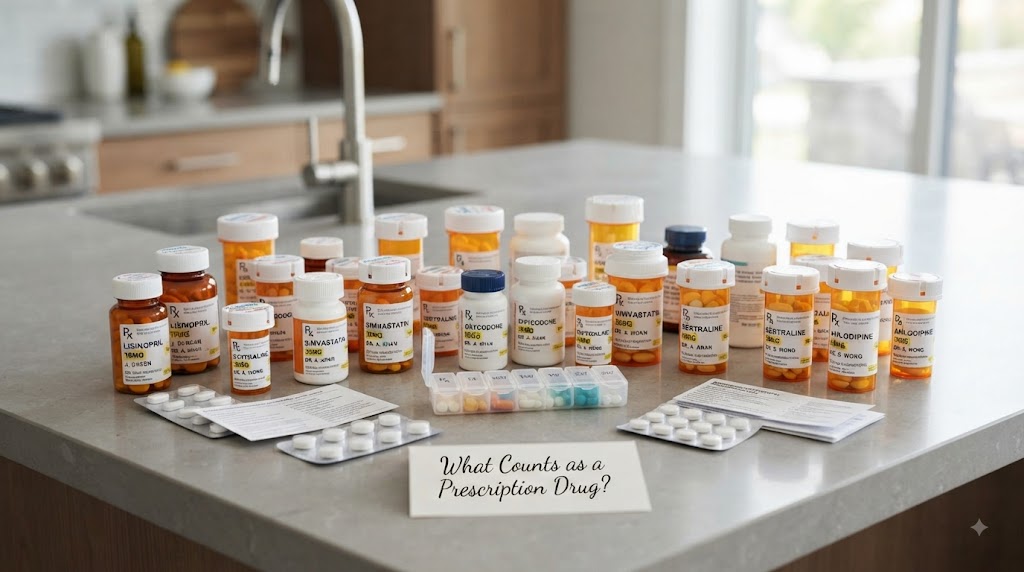
While not all drugs come with the same addiction risk, it’s important to know the medication you take belongs to the highest-risk classes. Examples of this include:
- Opioid Drugs – oxycodone, hydrocodone, fentanyl, morphine
- Benzodiazepines (BZDs) – Xanax, Valium, Ativan, Klonopin
- Stimulant Drugs – Adderall, Ritalin, Vyvanse
- Sedative/sleeping Pills – Ambien, Lunesta
They all work on the reward and pleasure systems of the brain, which is why they work so well – and why their use carries an actual risk of addiction.
How a Legitimate Prescription Turns Into Dependence
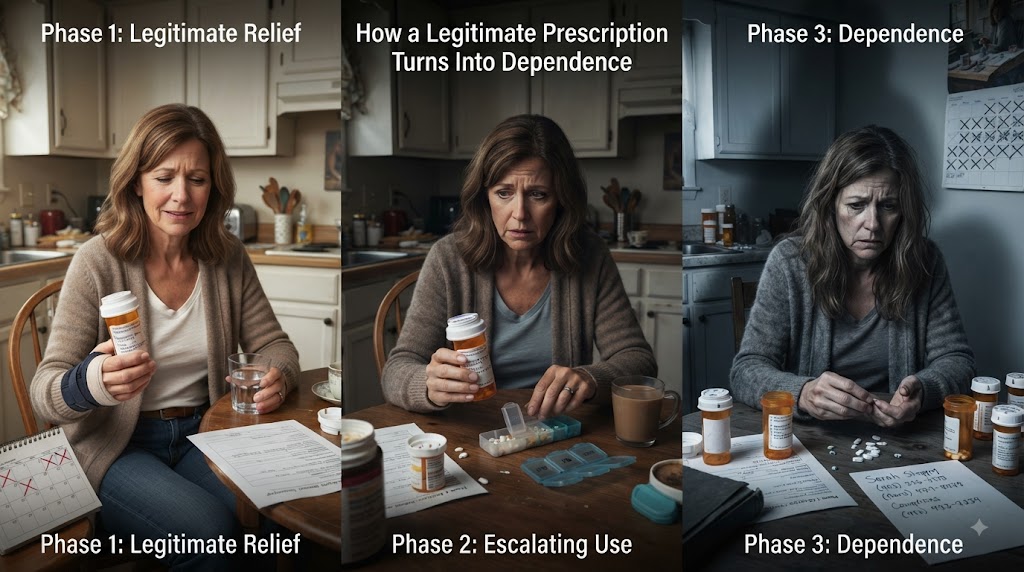
Addiction seldom comes without warning. Rather, the addiction will progress through a sequence of rather predictable stages:
| Stage | What Happens |
| Prescribed use | Using medications as directed for actual health condition |
| Tolerance | Same dose no longer has desired effect |
| Self-adjustment | Taking more of the medication or taking it more frequently but in an unofficial way |
| Physical dependence | Body is unable to function without the medication and withdrawal symptoms occur if stopped |
| Compulsive use | Continuing to use the drug |
Somewhere between being able to “tolerate it” and needing to be dependent is where many people lose balance. There’s no need to be a sissy or a moron; it is a physiologic process and can occur in practically anyone. If dosed correctly, long-term.
Common Risk Factors Worth Knowing
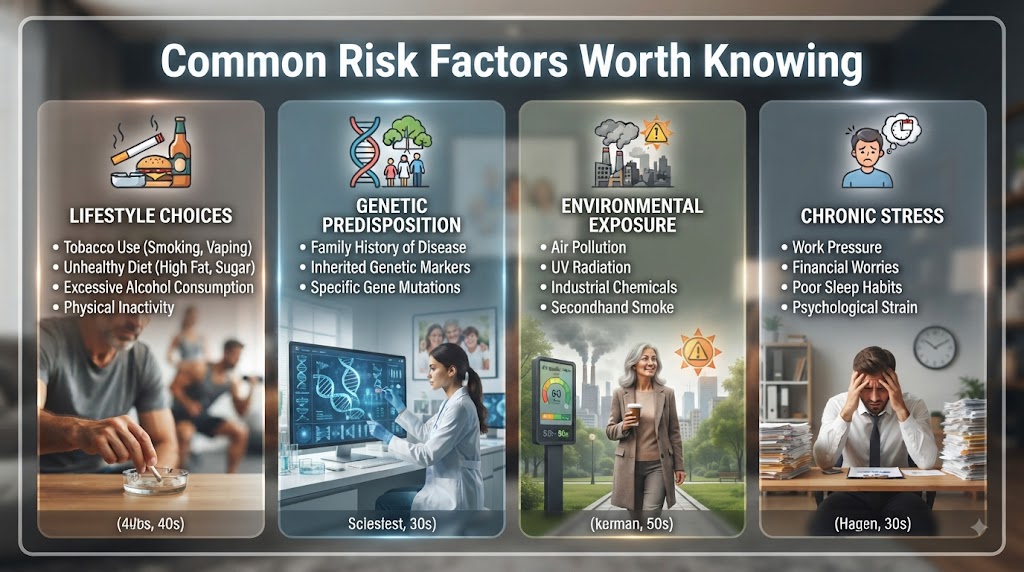
This change is seen more obviously in some people. Some things that may make this change more common are:
- Personal/family history of substance use disorder
- Current physical pain/long-term prescriptions
- Comorbid psychiatric disorder (e.g., anxiety, depression, trauma)
- Stressful environment/recent life events
- Availability of leftover or extra medication
The likelihood of an addiction developing isn’t there to guarantee any addict will be present; you or your patients still must be watching and alert for warning signals throughout a prescription not just at the start!
Signs That Use Has Crossed Into Misuse
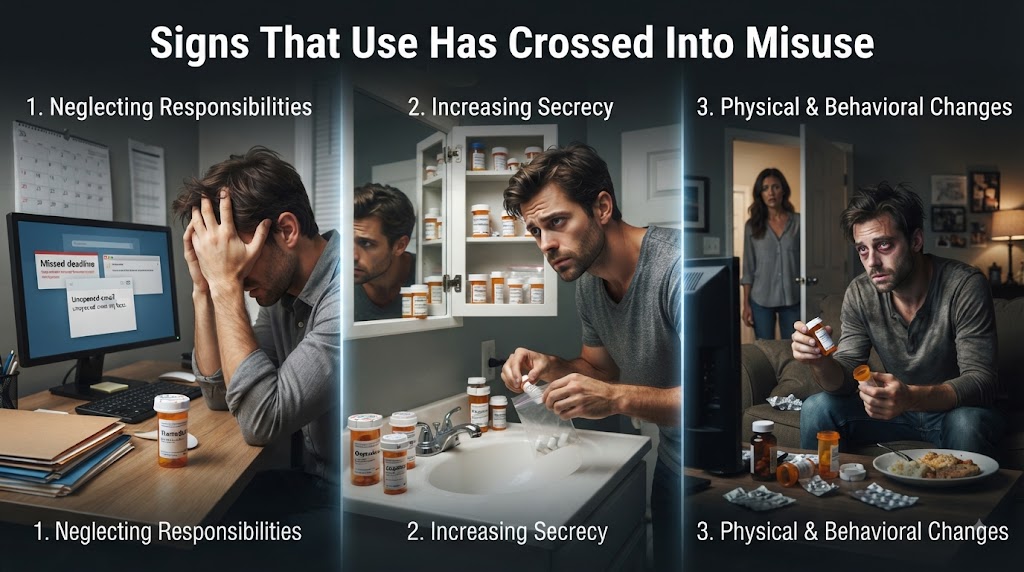
The deceptive nature of the early warnings allows them to be more easily rationalized. A few of the more telling early warnings include:
- Taking a higher dose than prescribed or finishing the prescription early
- “Doctor shopping” for a variety of prescriptions
- Intense cravings or anticipation for the next dose
- Withdrawal symptoms (sweating, nausea, tremor, anxiety) between doses
- User continues to take the medication despite negative consequences at home, work or relationships
If you read and hear the same of these, then take it to heart – either you are having a problem yourself or a beloved individual in front of your eyes is suffering.
Why Quitting on Your Own Rarely Works
When taking prescription drugs, such as opioids and benzodiazepines, withdrawal symptoms could be anything from extremely unpleasant to potentially fatal. In the case of benzodiazepines, you can have seizures if you were to try to quit immediately. This shows how a prescription might do more than just help- it may absolutely require some other assistance.
What Effective Treatment Actually Looks Like
No two roads to recovery are exactly alike, though good treatment programs tend to combine the following:
- Medical detox – Supervised withdrawal and health monitoring for safety and comfort.
- Individual therapy – Exploring underlying reasons for the substance use issue.
- Group support – Peer support from individuals who have similar experiences.
- Medication assisted treatment (MAT) – The use of medication (if needed) to assist in lessening cravings and stabilizing mood.
- Aftercare planning – Techniques and support for staying sober after formal treatment.
The idea is not just about ceasing to take the medication, but about building back a life where that medication is no longer a crutch.
How to Talk to Someone You’re Worried About
Be mindful of who and what you’re saying- the most important aspect of approach: If your intuition suggests a buddy or loved one is going through, the timing and words you select (not just your phrases) can make all of the difference.
- Speak at a quiet, opportune time (not mid-crisis or argument).
- Express concern rather than making accusations (“ I’ve seen that you’ve been exhausted recently,” not, “you’re addicted”).
- Be gentle rather than laying down the law.
- Be prepared with a list of available treatment alternatives, in the event they seem ready to receive it.
- Remember it is not the end if they aren’t receptive.
Getting Help Is a Sign of Strength, Not Failure

Prescription drug abuse is an equal opportunity killer, afflicting teenagers getting over a sports injury, parents aching from their career jobs or dealing with chronic back problems and individuals burning the midnight candle to make the rent. More often than not prescription drug abuse begins out of circumstances as opposed to being the result of careless decisions. Getting away usually begins with only one word: “help”.
If you personally are trying with a youngster who’s having difficulty with drugs, getting hold of a knowledgeable treatment service, for instance Revolution Recovery Center could offer salvation. A good medical center will likely feature remedy which mixes medication, mental counselling, and ongoing guidance to empower you to recover.
Contact details
Company name – Revolution Recovery Centers
Corporate Address – 415 S. Federal Highway, Boynton Beach, FL 33435
Call Now – (866) 890-7286 24/7 Support Available
Email Address – info@revolutionrecovery.com
FAQs
Can I really get addicted to a medication my doctor prescribed me?
Yep – sadly. While you and others use the medication exactly as prescribed, the body can build a tolerance or dependence – especially opioids, benzodiazepines and some other stimulants. It’s not something people are doing ‘wrong’, either; it just affects the body’s chemistry that way.
How do I know if I’m dependent versus just “needing” my medication for pain?
It’s hard to be self-diagnosing. The honest questions I advise that you ask yourself are: are you taking more than prescribed, is it causing you to worry/panic that you might run out of, has any doctor provided you with this medication on more than one occasion based on another’s prescription? If so I can help.
Is it dangerous to just stop taking my medication cold turkey?
It can be – as depending on what you’re detoxing from. Quitting benzodiazepines abruptly, for instance, can cause seizures. Opiate withdrawal is rarely life-threatening, but it can certainly be very painful. And this is exactly why medical detox is useful – to make sure it can’t kill you and it doesn’t bring you down to that miserable breaking point you always associate with withdrawal.
What if I still need pain management, but I’m worried about misuse?
This is a very legitimate fear, and a good provider won’t just encourage you to simply “cold turkey”. They may offer alternate pain management techniques or strategies, changes in dosage with oversight or the option of medication-assisted treatment approaches designed to alleviate pain and reduce physical dependence on opiates.
How do I bring this up with a family member without them getting defensive?
Choose a quiet, neutral moment-not in the heat of an argument, and definitely not at the peak of an actual crisis. Approach them by focusing on what you’ve been observing and how it’s made you feel rather than leading the conversation with judgment like, “You have a problem.” Instead, try, “I’ve been concerned about you for a while now.” Understand, too, that they might not be able to process what you’ve said the first time; it doesn’t mean it wasn’t significant.
Will treatment mean I have to stay somewhere for weeks?
Not necessarily. Depending on how severe your dependency is, your care can run from just outpatient, group therapy and aftercare all the way to the most comprehensive inpatient programs. Your treatment providers should be there to discuss these aspects with you and match you to the appropriate type of treatment, rather than suggesting a stock solution that fits all styles and levels of addiction.
What happens after I finish a treatment program — am I just on my own again?
No, and that is a very valid fear. Good programs should have provisions for after-care – continued therapy, support groups and relapse prevention techniques– to ensure you are not being put out of treatment with nothing to support you. Recovery is generally referred to as a process.
Is it too late to get help if I’ve been misusing my medication for years?
It truly is never too late. People recover from long-term dependencies all the time. The fact that you’ve been dependent for a long time does not remove your access to treatment and recovery- the just means that your treatment providers will incorporate where you are today into your care plan.