








Medically Reviewed by: Alyssa DeStefano, LCSW, Licensed Clinical Social Worker | Revolution Recovery Center
Choosing an addiction treatment program can be challenging, but when you’re a member of the LGBTQ community, you have yet another difficult hurdle to overcome – will they see you and accept you here? Many in the community are not used to being treated fairly, respectfully or with dignity. It’s why simply thinking about going into a treatment program can be daunting.
The good news, however, is that there is genuine, affirming care available – it’s even a bit different than standard care in certain crucial respects.
Here’s how you or a loved one can ensure you find a program that views identity as a positive thing, and not something that needs to be altered.
Why LGBTQ+-Specific Care Matters in Recovery

Substance use doesn’t take place in a void. For many in the LGBTQ+ community addiction and experiences with minority stress, family rejection, workplace discrimination or coming-out trauma go hand-in-hand. A treatment program that doesn’t take into account these realities addresses substance abuse in a superficial, though not irrelevant, way that does not address its underlying causes. Affirming care views recovery not as solely cessation from substance use but as the healing of all the parts that, in general American society, it has been okay for the addict (or others who may abuse substances to cope with addiction) to be told were somehow damaged.
Signs a Treatment Center Is Genuinely Affirming

Not all organizations calling themselves LGBTQ+-friendly live up to their billing. How do you spot a true ally? Check these telltale signs:
- Training staff about LGBTQ+ people: Sexuality, gender identity and community-specific stress are all components covered by continued clinician training and education for counsellors.
- Appropriate Intake Forms: Intake forms ask about chosen names, preferred pronouns and relationship structure without making any assumptions.
- Non-Discrimination Policy in writing: They have an articulated and published discrimination policy against bias towards clients based on sexual orientation and gender identity.
- Representative staff: A counsellor or staff leader or member who is LGBTQ+ themselves in a therapy or peer-support capacity.
- LGBTQ specific therapy groups: A therapeutic group is set up not for a more general “diversity” issue but rather dedicated to sexual orientation and gender identity needs.
- Trauma-Informed Care: A recognition and integration of minority stress, parental rejection, and identity-based trauma as contributing elements to one’s current experience and the healing process.
Questions to Ask Before Choosing a Program
There is value in asking questions, rather than depending solely on the sales patter of a particular facility before deciding to go there.
| Questions to Ask | What to Listen For |
| Do you offer LGBTQ-affirming support groups or specialty programs? | Specific programs not some hazy assurance |
| How is your clinical staff trained in LGBTQ competency? | Consistent training rather than attending a seminar in the last several years. |
| Will you use my name and pronouns consistently? | An affirmative. That means saying “yes” and helping that go through so it works. |
| What is your policy for roommate or housing assignments for trans and nonbinary individuals? | A detailed, customized policy. |
| Do you discuss family-rejecting responses or “coming out” experiences during therapy sessions? | Admitting directly that this has to be done in order to be treated. |
| Can I connect with an LGBTQ+ alumni to hear about their experience? | An intention of making a referral. Don’t blow the person off. |
The Role of Community and Peer Support
Recovery usually doesn’t mean going through the process by oneself, and for LGBTQ+ individuals, finding other individuals who have experienced what they have can significantly increase their chances of achieving sobriety. This process of recovery that often feels like a lonely one becomes significantly less lonely in a milieu group comprised entirely of other LGBTQ+ clients. It is much easier for a client to discuss things like family rejection, personal shame, or balancing relationships with what recovery brings when they feel they are not just talking about issues, but to an individual who has personally experienced many of the same things, instead of just someone trained in these methods of counselling. Of course this does not replace treatment but supplements and enhances recovery.
Red Flags to Watch Out For
Alongside the things you should keep an eye out for are things you shouldn’t. Programs to be aware of are ones which:
- Use old or clinical terminology to describe LGBTQ identities
- Are unable to clearly describe their LGBTQ training or policies when asked.
- Bundle LGBTQ-related issues into one broad “diversity training” session with no substantive information.
- Have had prior complaints lodged against them in connection with discrimination or misgendering of individuals.
- Use messaging similar to conversion therapy and promote an idea of “working through” your identity in the context of sobriety.
How Affirming Care Improves Long-Term Outcomes
When clients feel comfortable expressing their entire selves throughout the course of treatment, they feel safer, disclose more readily in sessions, develop deeper therapeutic relationships, and are more likely to stick with treatment all of which contribute to higher lasting sobriety. So rather than being an additional nicety in the treatment room, caring affirmation can mean the difference between maintaining lasting sobriety for LGBTQ+ clients versus relapsing on generic treatment.15 Research and clinical outcome data consistently confirm it.
Finding the Right Fit for Your Recovery Journey
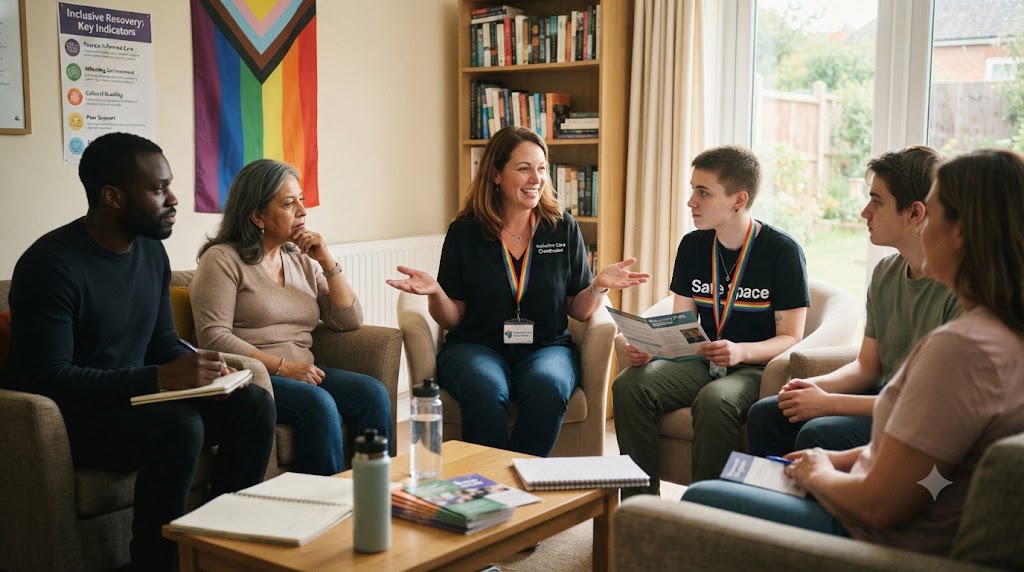
As you weigh your options, it’s important to remember this process is personal, especially for LGBTQ+ people, so a bit of extra effort researching a program for truly comprehensive affirming care rather than superficial tolerance goes a long way. Don’t hesitate to ask probing questions about your potential treatment facility, scrutinize policy details, and listen carefully to the first few conversations you have. Here at Revolution Recovery Center, affirming care is not an add-on, but fundamental to how we do recovery.
Contact details
- Company name – Revolution Recovery Centers
- Corporate Address – 415 S. Federal Highway, Boynton Beach, FL 33435
- Call Now – (866) 890-7286 24/7 Support Available
- Email Address – info@revolutionrecovery.com
FAQs
How do I know if a treatment center is actually LGBTQ+-friendly, or just says it is on their website?
Truly, the easiest and most direct route is to ask beforehand. Make a call, ask about the training of their staff and whether or not they offer specific LGBTQ+ groups. Be sure to ask about their policies around pronoun usage, chosen names, etc.. If the person picking up the phone becomes flustered or unclear – that should be enough for you to walk.
Will I have to explain or justify my identity to my counsellor?
You don’t have to, however. For those in affirming programs, your counsellor has at least a baseline understanding of LGBTQ+ experiences, and you can focus your energy on recovery rather than teaching basic information. If you get the feeling you’re consistently explaining what LGBTQ+ even means, a program may not be a good fit.
What if I’m not out to my family — can I still get LGBTQ+-affirming care privately?
Yes! By affirming treatment, you are not announcing to everybody the details of who you are and what you are doing. All decent programmes protect your privacy and allow you to decide whether you communicate that to other people, who those other people are and when you choose to, including to close relatives who are engaged in the treatment with you.
Are there separate treatment programs for LGBTQ+ people, or am I just added into a general group?
That depends on the center. Many have dedicated LGBTQ-specific programs or therapy groups. Others integrate LGBTQ-affirmative approaches across their entire treatment. Neither way is inherently superior, but you absolutely have the right to know what kind of experience you’re heading into, so ask.
What if I’ve had a bad experience with treatment or healthcare before because of my identity?
That happens more than you might think, and yes, it’s fine to introduce that history to a new center on your very first call. They, a good program will absolutely need to know that in order to rebuild some trust so that you do not happen to you again.
Does affirming care cost more than regular treatment?
Does that mean I have to pay more? Not always. Affirming care refers to the way treatment is provided – the policies, training, and approach of the staff – and does not mean you will be charged extra for these things. The cost typically depends on the intensity of service (inpatient or outpatient) and on whether your insurance policy covers the service, not on whether or not the program is LGBTQ+-friendly.
Can my partner or chosen family be involved in my treatment?
In many affirming programs, yes. Recovery usually goes most smoothly with support of the most important people to you, and it doesn’t necessarily have to be biological. Find out in advance whether visits and/or partners/chosen family are involved in therapy.
What if I’m nonbinary or trans — will housing and pronoun use actually be respected?
This question seems obvious and it is completely fair and necessary to ask it in the beginning. An affirming center will have a specific and considered policy on rooming assignments. They will respect your chosen name and pronouns and use them, not only on paper but in conversation.