















Medically Reviewed by: Alyssa DeStefano, LCSW, Licensed Clinical Social Worker | Revolution Recovery Center
Ever notice how the “Big 3” – anger, bad memories, and substance abuse – tend to buddy up? Well, you aren’t imagining it. Many people with a short fuse – far from having a “bad temper,” this typically stems from the tip of an often unrecognized, unresolved trauma.
And when we avoid the pain of that trauma, whether we cope with anger or use alcohol or other substances to manage that anger, the latter two typically go Hand-In-Hand.
Getting clear about how each fits in is typically the first true step towards a real recovery, because without comprehension, effective treatment cannot exist.
Why Anger Isn’t Always What It Seems

Anger has a terrible reputation as it may feel so bad and explosive for people, but it is very often not at the core but instead a messenger or indicator. Beneath a lot of rage there is usually a vulnerable, painful emotion – be it fear, shame or grief, or a feeling of helplessness you feel you can’t bear. Anger feels effective because it feels “strong”, so it often has been learned to be preferred by the brain. If someone has lived a life in an unsafe home environment or seen a lot of conflict, their automatic response may have even become to go to anger in order to get heard or be safe.
How Trauma Rewires the Brain and Body

The scary truth is, trauma isn’t a simple bad memory stored somewhere in the mind. It rewrites how your brain and central nervous system work, sending the amygdala (danger detection region) into overdrive while muffling your logical frontal lobes. Consequently, the traumatized brain is now poised to be hypervigilant and will remain much more reactive until properly addressed – causing responses that make total sense for the nervous system but seem irrational from the outside perspective to trigger a large output for such a small stimulus. This is precisely why willpower doesn’t seem to tackle trauma responses because it’s not the way we think we need to address it, but rather the underlying wiring needs to do the healing.
The Anger-Trauma-Addiction Triangle
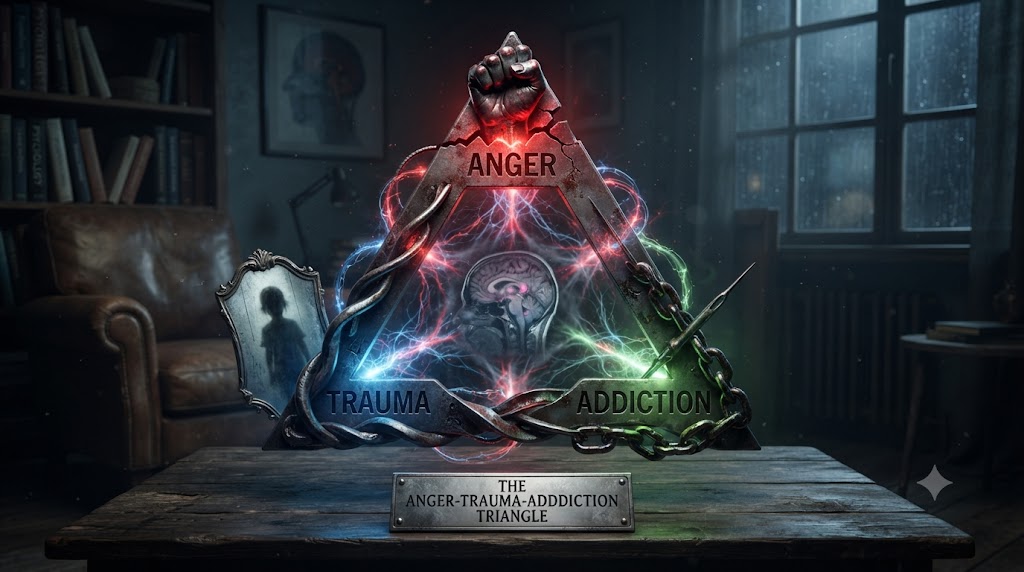
These three states tend to drive one another: We experience unimaginable levels of emotional suffering because of trauma. We express our pressure from that unbearable trauma by being angry. We use chemicals to shut off anything that’s left by the anger and trauma: The guilt, the grief, the failure, the depleted strength…each component sustains the other two.
Which is why we’ll relapse if we get treated only for substance addiction, and never really work on the other pieces. Here’s a peek into how that cycle typically goes:
| Stage | What’s Happening | Common Signs |
| Trauma Exposure | Too traumatic an event, and the nervous system is unable to survive | Hypervigilance, flashbacks, emotional numbness |
| Anger as Protection | Your angry brain tricks you into feeling empowered in the face of helplessness | Irritability, outbursts, difficulty de-escalating |
| Substance Use as Relief | Use alcohol or drugs to shut down your rage or the effects of trauma | Increased tolerance, secrecy, using alone |
| Reinforced Cycle | Substance abuse disorders lead to poor emotional regulation, making you angrier and triggering negative memories from your past. | Escalating conflict, isolation, deeper dependence |
Why Treating Just One Piece Rarely Works
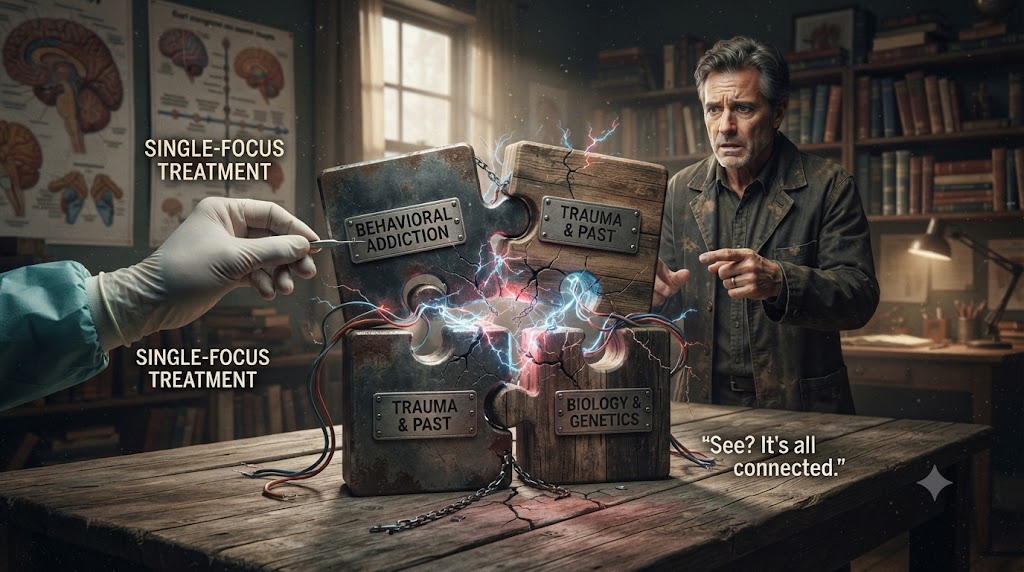
When you’re working in a healing profession, it’s easy to try and treat whatever has the most to say – in this case it’s addiction, as it typically produces the most obvious outward signals. Left unaddressed, however, the build-up of pressure that fueled the drug use in the first place only remains. For this is why so many people return to their drug of choice when solely treated for addiction: the actual cause is left undisturbed. The building block for true lasting change then lies in treating trauma, anger, and addiction as interwoven factors that necessitate healing for the nervous system, tools for large-scale emotion regulation, and reconstruction of what the substance use was displacing.
What Integrated, Trauma-Informed Treatment Looks Like

Care is not just three empty boxes to mark ‘self-awareness’, ’emotions’, and ‘relationships’, so finding anger management that also includes trauma-based therapies and substance-use treatment is one place where anger management rehab can make the most of all three areas by considering all of them together rather than treating each independently. An anger management clinic that sees the holistic needs of an anger problem would see people learning ways to manage emotions, identifying triggers of anger, processing trauma or painful memories through modalities such as EMDR and trauma-based CBT, together with the process of ceasing alcohol or other drugs. Additionally, it would consider group and family counselling to work on relationships which often suffered under the impact of both addiction and anger and other issues. At the heart of this form of recovery is not sobriety, but ensuring a person’s internal capacity to begin feeling secure within their bodies and minds so as to offer anger management and substances are not their only alternative.
Moving Forward With the Right Support

If this is you or a loved one caught up in the mix – it isn’t who you’re supposed to be. Anger and trauma combined with addiction aren’t a personal failure, they’re a pattern learned for protection and it can be learned through. Healing this cycle of self-destruction along with anger and trauma needs compassion, understanding and patience – which is precisely the specialized team you’ll find with an anger management rehab such as the team at Revolution Recovery Center that integrates your treatment to look at the root cause of the problem, not just the behaviour itself. The courageous first step of seeking care just might be the one that turns everything around.
Contact details
- Company name – Revolution Recovery Centers
- Corporate Address – 415 S. Federal Highway, Boynton Beach, FL 33435
- Call Now – (866) 890-7286 24/7 Support Available
- Email Address – info@revolutionrecovery.com
FAQs
Why do I get so angry when I’m trying to stay sober?
This is really common! When you cut out alcohol/drugs, you often get rid of the very thing that was helping you tune out negative emotions- and anger typically comes right after the grief and sadness – and she will arrive in full, amplified mode without the filter. It’s not an indication that there’s “something wrong” with you, often it signifies unprocessed trauma or stress that has nowhere else to go. A skilled therapist familiar with this connection can guide you toward addressing the cause of the Anger and not just living “white knuckle” life as you navigate the Anger “outbreaks” or “tantrums.”
Can unresolved trauma really cause addiction, or am I overthinking it?
You are not making a big deal. Trauma alters our brains’/bodies’ reactions to stress and using substances to find a way out of that is perhaps one of the most human experiences one could tap into. It’s not an issue of moral failing that is so unique to your wiring. For many, “using” as a tool to soften symptoms of trauma only becomes visible when one slows up. If memories/feelings/situations, whenever encountered tend to trigger an urge to go pour, smoke, swallow/snort – that alone is something very worthwhile.
Is it normal to feel angry at myself for relapsing?
Totally normal-although here we invite a bit of grace and self-kindness. Relapse is usually an indication of an unresolved underlying source-an anger, trauma or stress-not a message that you are “failed” in recovery. Beating yourself up for a relapse will feed exactly the same Shame and self-loathing that drove the substance use and shame you through it too.
How do I know if I need an anger management rehab instead of standard addiction treatment?
What if your anger seems overblown for the situation you’re in, or when it’s causing problems with your relationships or career? If anger often appears just before your substance use, then anger should be addressed in conjunction with, rather than as an afterthought to your addiction treatment. A comprehensive treatment approach that integrates substance use therapy with trauma and anger management therapies into a single treatment plan will prove more fruitful than working on these issues individually or individually.
Will I have to talk about my trauma in detail to get better?
Not required, especially not by the time you’re “ready.” When done well, good trauma informed care means you are in charge of how much information is revealed; certain modalities, like EMDR don’t require details of a trauma story, only that we facilitate how your brain organizes it so your nervous system stops being re-triggered. When safety and stability are a priority, with trauma processing gradually over time when it feels safe and manageable – there are no “rules that everyone must follow.”
How long does it take to work through anger, trauma, and addiction together?
There is no specific timeline and anyone claiming to have one would be misleading you. Healing has stages – grounding and stabilization, deeper traumas/anger work, relapse prevention and creating a life beyond treatment. We all see different shifts occur over different timelines. We support each individual through every layer of their healing journey – not just rushing them.
Why does my anger feel worse at certain times, like anniversaries or specific situations?
Your nervous system picking something up before your rational brain has even had a chance to process-that’s typically what this is. Trauma responses become tied to specific dates, locations, smells, or even intonations (yes, anniversary reactions are a well-researched phenomenon). The increase in anger that pops up at certain times in the year isn’t spontaneous-your body is recalling something and your trigger is the ‘something’ that brings that memory up to the surface. Calling that trigger when it happens (“this is the anniversary response”) can help decrease its power a little too.
Can I work on my anger and trauma without giving up drinking or using first?
Most people are interested in clearing up a lot of the underlying problems before tackling substance abuse, but that’s often not how it works in real life. For the reasons listed above, if you continue using (especially if you are using heavily), your emotions won’t be receptive to treatment. However, not all programs will insist on the all-or-nothing approach on day one of treatment. The best ones will see you as you are and help you work on all three things as you proceed.